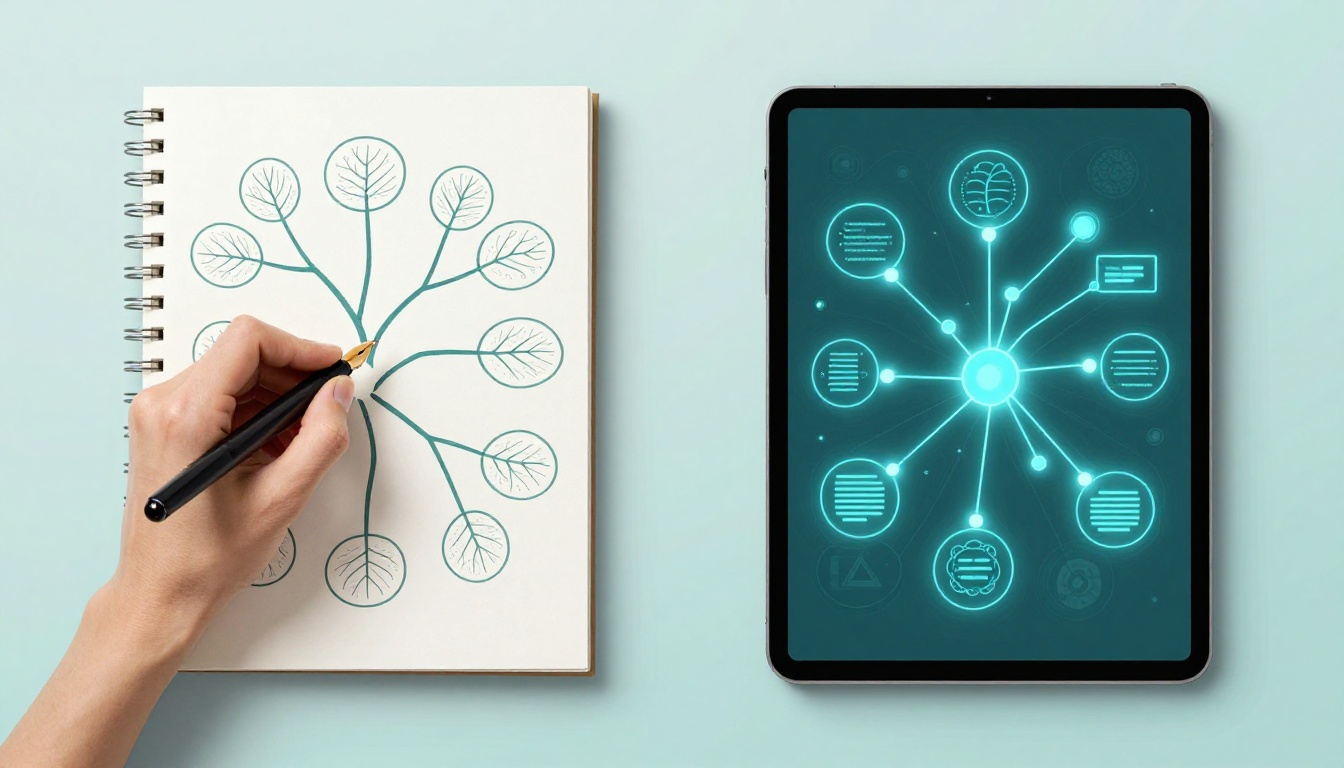
Picture this. You’re in the middle of a hectic workday. Ideas swirl in your head like a storm. You grab whatever’s handy to sort them out. Mind mapping turns that chaos into branches on a tree. It starts with one central idea. Then lines shoot out to related thoughts.
So, do you reach for paper and pen? That tactile scratch feels right. Or do you fire up a digital app? Edits come quick, and sharing stays simple. In 2026, analog tools surge back. People crave focus away from screens. Yet digital options boom with AI smarts. Both have fans.
This post breaks it down. We cover paper’s creative spark. Then digital’s power features. A direct matchup follows with real tools like Flowodo and MindMeister. You pick what matches your style, whether solo brainstorming or team projects.
The Hands-On Magic of Paper Mind Mapping
Paper mind mapping pulls you in. You draw freely. No menus slow you down. Ideas flow fast because your hand moves with your thoughts. Students love it for study notes. Creatives sketch wild concepts. In 2026, this method rises again. Folks want breaks from digital fatigue.
Handwriting links straight to your brain. Colors pop on the page. Doodles add whimsy. A napkin turns into a project outline during lunch. No app crashes. Just pure flow.

Better Memory from Handwriting
Your brain lights up more when you write by hand. Studies show it beats typing for recall. For example, researchers found handwriting sparks wider brain connections. This helps ideas stick longer.
Add colors for tasks, greens for goals. Doodles tie emotions to facts. Students remember lectures better this way. Pros jot quick plans and retain details. In short, paper builds stronger mental hooks. Typing feels flat by comparison.
Check Scientific American’s take on handwriting benefits for more proof.
No Tech Barriers or Costs
Grab paper and pens. Costs stay low, often under five bucks. No subscriptions nag you. Batteries die? No issue. Internet out? Keep going.
Travelers sketch on planes. Quick brain dumps happen anywhere. Digital tools demand logins and updates. Paper skips that hassle. You focus on ideas, not glitches. For solo thinkers, this freedom wins big.
Unlock Endless Possibilities with Digital Mind Mapping Tools
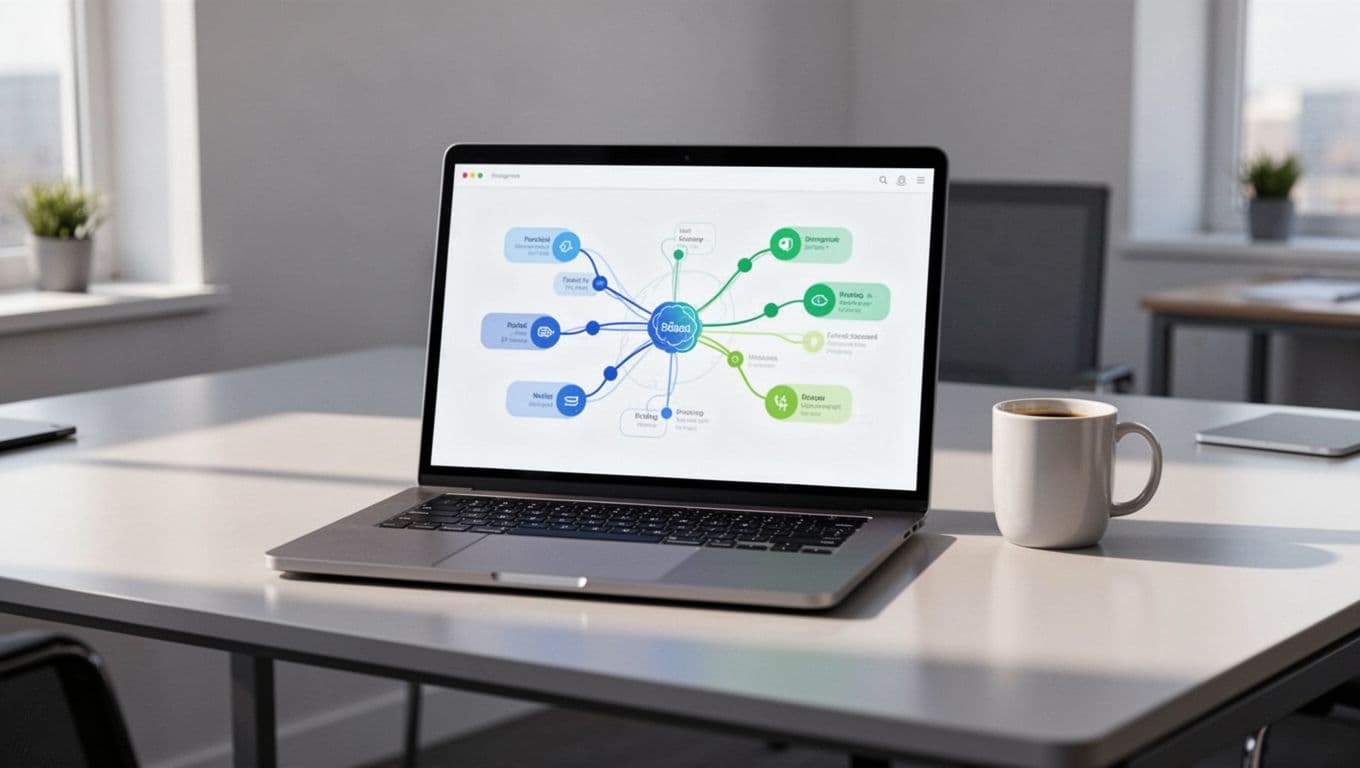
Digital tools expand your canvas forever. Drag nodes around. Add images or links. Changes happen in seconds. Teams edit live from anywhere. In 2026, apps like Xmind top lists for smooth sync across devices.
Flowodo uses AI to build maps from keywords. MindMeister shares with groups. Xmind offers pro layouts for one-time buys. Miro acts like a huge whiteboard. Cloud storage means access on phone or laptop. Export to PDF or slides easily.
These fit big projects. Frequent tweaks stay simple. Yet screen time adds up, so mix in breaks.
AI-Powered Speed and Smart Suggestions
Type a phrase. AI fills branches. Flowodo ranks high in 2026 for this. It generates full maps fast. Busy pros save hours.
EdrawMind suggests links too. No blank-page stare. Tools auto-organize chaos. Perfect for reports or plans. Start rough, refine later.
See Flowodo’s 2026 tool comparison for quick starts.
Seamless Teamwork and Sharing
Invite colleagues. They join live. MindMeister turns maps into tasks. Miro lets groups draw together. Remote work thrives here.
Changes sync instantly. Comments pop up. No email chains. In 2026, teams rely on this for projects. One person adds media. All see it.
Paper vs Digital: A Clear Comparison to Guide Your Choice
Both shine in spots. Paper feels alive. Digital scales up. Here’s a quick side-by-side on key needs.
| Factor | Paper Wins When… | Digital Wins When… |
|---|---|---|
| Editing | Simple sketches, few changes | Drag-drop, unlimited tweaks |
| Sharing | Personal use, snap a photo | Live collab, cloud links |
| Creativity | Tactile flow, doodles | Templates, AI ideas, multimedia |
| Cost | Pennies for basics | Free tiers, then $5/month |
| Portability | Always ready, no charge | Multi-device sync |
Paper suits quick solos. Digital handles groups. Trends favor hybrids. Scan sketches into apps.
For details on pros and cons, read this hand-drawn vs digital breakdown.

When Paper Shines Brightest
Solo brainstorming calls for paper. Travel light with a notebook. No-tech spots work fine. Memory tasks benefit most. Students nail exams this way. It cuts distractions cold.
When Digital Takes the Lead
Big plans need digital scale. Groups edit together. Changes pile up fast. Add videos or files. Pros track projects smoothly.
Pick Your Path to Clearer Thinking
No perfect choice fits all. Paper gives focus and memory boosts. Digital brings power and shares. In 2026, blend them. Brainstorm on paper. Digitize for teams.
Tired of screens? Start with paper. It matches the analog wave for less stress. Want speed? Try Flowodo‘s free AI tier.
Grab pen and paper today. Or open an app. Test both this week. Which clears your mind best? Share in comments below. Your ideas deserve the best map.