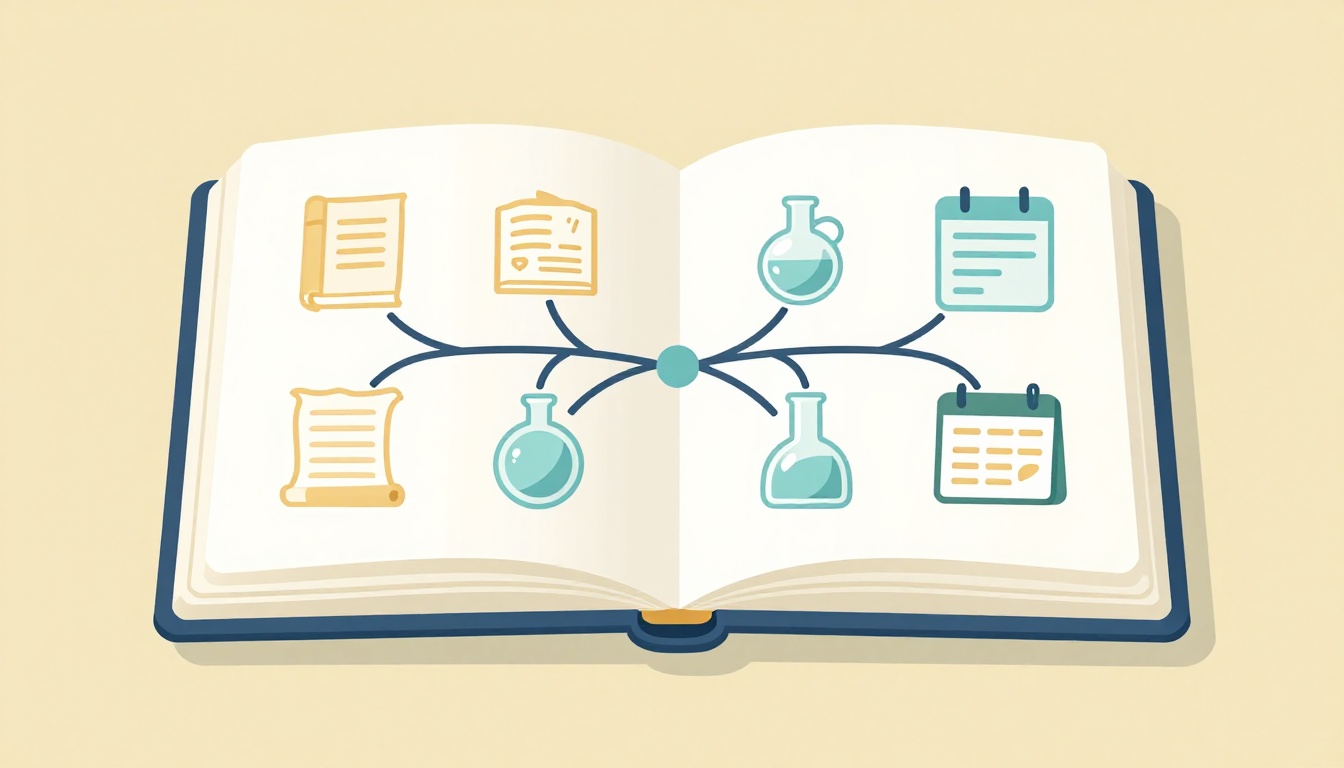
Picture a high school student buried under stacks of notes for a history exam. She feels lost in dates and facts. Then she tries mind mapping. A central idea branches out to key events and people. Suddenly, everything connects. She aces the test.
Mind mapping starts with one main idea in the center. Lines branch to related details, like a tree. This visual tool boosts memory because your brain loves pictures and links. You’ll see patterns fast. Best of all, it makes studying fun.
Discover what subjects work best with mind mapping to boost your grades and productivity. Literature, history, science, and planning shine here. You’ll also find daily uses. This post breaks it down with examples and tips.
Creative Subjects Like Literature and History That Thrive with Mind Maps
Stories and timelines fit mind maps like a glove. These subjects involve connections between ideas. A map shows how characters drive plots or events spark changes. You grasp the big picture at a glance. Plus, colors and images stick in your mind longer.
Start simple. Grab paper or a free app. Put the main topic in the center. Add thick branches for big ideas. Then draw thinner ones for details. This method cuts study time in half.
Literature and Language Arts: Mapping Plots, Characters, and Themes
Books burst with layers. Branch from the title to characters, quotes, themes, and symbols. For example, map To Kill a Mockingbird. Center: the novel’s name. One branch lists Scout, Atticus, and Boo Radley with traits. Another covers racism and innocence as themes. Add quotes like “You never really understand a person” on sub-branches.
This setup helps write essays. Spot links between symbols, like the mockingbird for innocence. Reviews become easier too. Students report better grades because they see the story’s flow.
Tools like pen and paper work fine. Digital ones let you zoom and share. Check out how to create a mind map from any text for quick starts with books. In short, mind mapping for literature analysis turns dense reads into clear visuals.
History and Social Studies: Linking Events, Causes, and Effects
History unfolds like a chain. Place a key event in the center, say the American Revolution. Branches show timeline dates, like 1776 Declaration. Add people: Washington, King George. Causes branch to taxes and no representation. Effects include independence and new government.
Patterns pop out. You notice how one battle leads to another. Test prep gets simpler because recall improves. Group similar eras on one side of the map.
For visuals, sketch icons: a tea bag for the Boston Tea Party. This beats linear timelines. See history mind mapping examples for ready templates. As a result, social studies feels alive, not just memorization.
Science and Planning Topics Where Visual Connections Rule
Science builds systems. Mind maps show how parts link, from cells to ecosystems. Planning needs steps. Branches track tasks and goals. These areas handle complexity well. You avoid overwhelm by seeing relations.
Clarity rules. Experiments follow logic flows. Projects stay on track. Both school and work benefit.
Science: From Experiments to Ecosystems in One Map
Start with a hypothesis in the center. Branches cover methods, data, results, and conclusions. For the water cycle, center: evaporation. Branches to condensation, precipitation, collection. Add arrows for flow.
Physics forces map nicely too. Central force branches to gravity, friction, examples like falling apple. Problem-solving uses fishbone style: issue in center, causes on branches.
Students grasp concepts faster. One mapped the periodic table by groups and properties. Grades jumped. Explore concept maps in science for more ideas. Therefore, mind mapping for science concepts simplifies tough topics.
Project Planning and Career Studies: Steps to Success Visualized
Goals drive these maps. Center: project name or job target. Branches list tasks, deadlines, resources, risks. For a science fair, add research, build, test phases.
Career hunts map skills needed, like resume tips or interview prep. Stay organized because nothing slips.
Pros include motivation from seeing progress. Check off done branches. Schools use them for group work. In addition, they cut stress by breaking big jobs small.
Everyday Wins: Mind Maps for Work, Life, and Future Goals
School ends, but mind maps keep winning. Use them at work for ideas. Plan days or big life changes. They fit busy schedules. Productivity soars because you focus on links, not lists.
Real people swear by them. A manager mapped meetings; prep time dropped. Try one today for quick wins.
Work Tools Like SWOT Analysis and Team Brainstorms
SWOT shines: Strengths, Weaknesses, Opportunities, Threats from center. Add examples per branch. Teams build live maps in sessions. Ideas flow fast.
Tools like Miro help remote groups. Draw together, vote on branches. Brainstorms cover marketing plans or product launches.
This method sparks creativity. One team mapped a launch; sales doubled. Mind mapping for productivity in daily life starts here.
Personal Planning: Events, Health Goals, and New Year Resolutions
Life events map easy. Wedding center branches to venue, guest list, budget. Fitness goals list exercises, meals, track progress.
New Year resolutions get realistic. Central goal: run marathon. Branches: training weeks, gear, motivation tips.
Busy folks love the simplicity. Update as you go. Meanwhile, health improves from clear plans.
2026 Trends: AI Making Mind Mapping Smarter and Faster
AI changes everything this year. Tools now build maps from text or videos in seconds. No blank page stares. April 2026 data shows Flowodo tops for solo use. It crafts full maps from prompts like “plan a trip.”
Mapify handles YouTube clips. GitMind turns images or voice to branches. MyMap.AI adds sources. EdrawMind makes detailed 49-branch maps. Free plans abound, pros under $5 monthly.
Trends include multi-input: PDFs, webpages, even browser extensions. Teams love Miro AI for workshops. These make mapping instant.
Check best AI mind mapping tools reviewed in 2026 for picks. Future holds easier collaboration. Pick one; your first map takes minutes.
Mind maps transform literature, history, science, planning, work, and life. They link ideas, boost recall, add fun. You save time and stress.
Grab a subject you study or plan. Map it now. Share your wins in the comments. What will you try first? Keep learning; maps make it stick forever.